
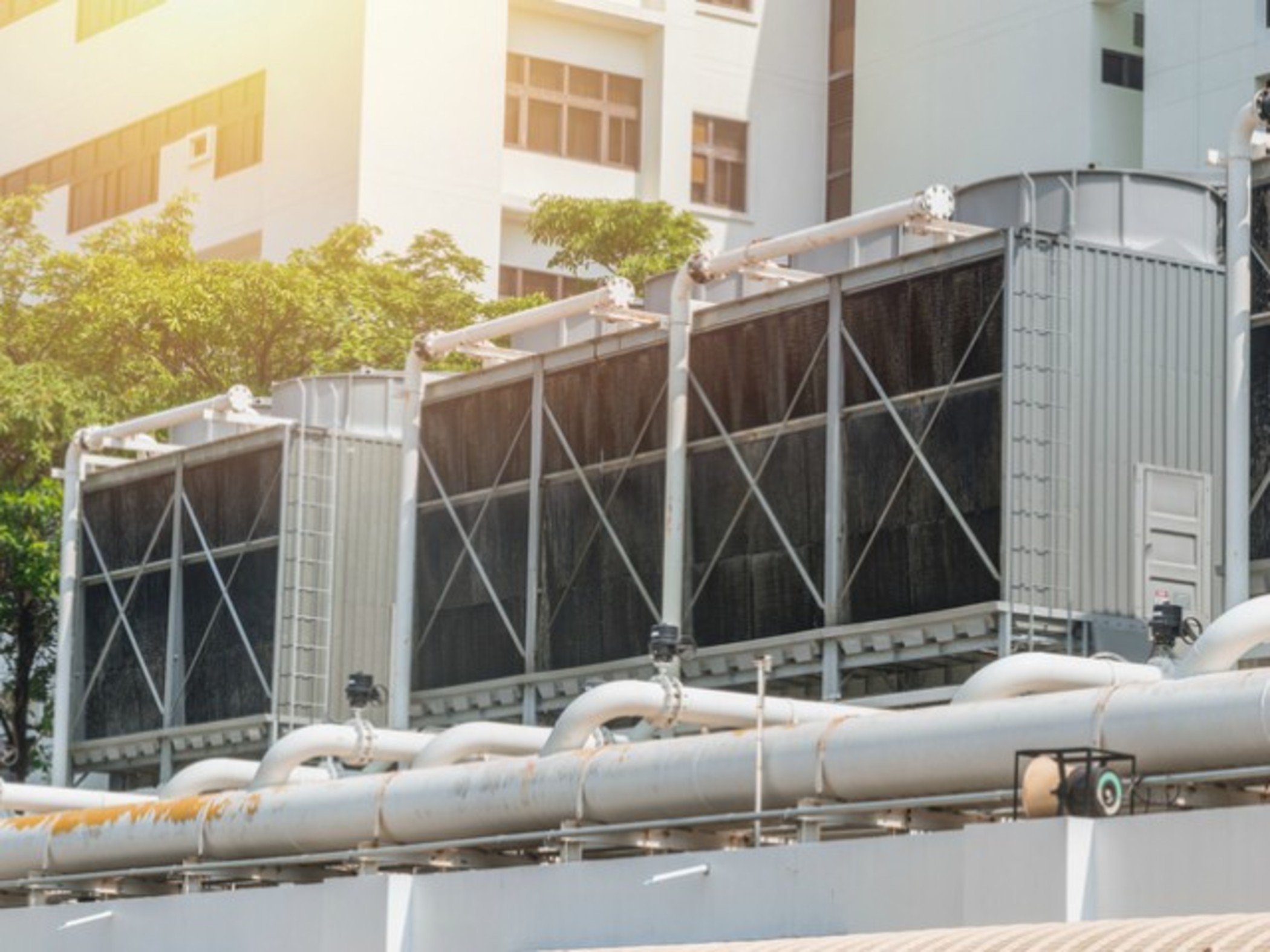
Chilled water systems are widely used to provide air conditioning in large commercial and institutional facilities. In many facilities, chillers are the single largest user of electricity. For these reasons, facility managers looking to improve building energy performance should start by optimizing chiller efficiency.
These chiller performance improvement strategies range from simple maintenance measures to energy efficiency upgrades.
- Use controls to sequence chillers. Monitor the capacity of all chillers and use controls to switch them on and off so each is operating in its most efficient zone.
- Inspect condenser tubes regularly and clean as needed. Scale buildup in condenser tubes can decrease chiller performance and capacity by reducing heat-transfer efficiency. Periodic cleaning using brushes or chemical or ozone treatments can help keep tubes clear.
- Adjust chilled water supply temperature. Reset chilled water supply temperature — up to a maximum of 50°F — based on the position of the cooling coil valve or water pump speed. This adjustment can help reduce compressor energy use, but it requires an energy management system and programming of controls.
- Reset condenser water temperature. Adjust the condenser water supply temperature to within 3°F to 7°F of the outside wet-bulb temperature — the temperature of the air if it were cooled to 100% relative humidity.
- Convert three-way valves to two-way valves. Check the configuration of chilled water valves on each cooling coil. If three-way valves are used with bypass, convert them to two-way units and install variable speed drives (VSDs) on secondary pumps. These changes will allow you to save energy by adjusting pump speed in response to varying cooling demands.
- Control pumps, fans and compressors with VSDs. Most chiller plants have varying load requirements, but the motors that operate pumps, fans and compressors are designed to operate at a single speed, often wasting energy. Installing VSDs can save energy by adjusting motor speed to match demand.
- Upgrade to magnetic bearing compressors. If your system uses reciprocating or screw compressors, upgrade to units with newer magnetic bearing technology. Magnetic bearing compressors are significantly more efficient under part-load. Also, the maintenance requirements for magnetic bearing compressors are simpler because of their lubrication-free operation.
- Install water-side economizers. Water-side economizers save energy by allowing cooling towers to produce chilled water directly for air handlers when weather conditions are right. One popular type of water economizer is known as a plate-and-frame heat exchanger. In cooler, dry climates, water-side economizers can provide more than 75% of building cooling needs, according to the U.S. Environmental Protection Agency.
Is your chiller plant older or in need of repair? Today's chillers offer significant benefits in terms of efficiency and performance, making any chiller more than 15 to 20 years old a good candidate for replacement.
New chiller makes a strong case for energy efficiency
The chiller plant at a large city's crime laboratory needed an upgrade. Two outdated 130-ton reciprocating compressors were wasting energy and increasing demand charges. They upgraded to a new plant that included variable speed cooling tower fans and pumps, as well as a magnetic bearing compressor. The annual energy and demand savings totaled $65,000, leading to a payback in two years.