
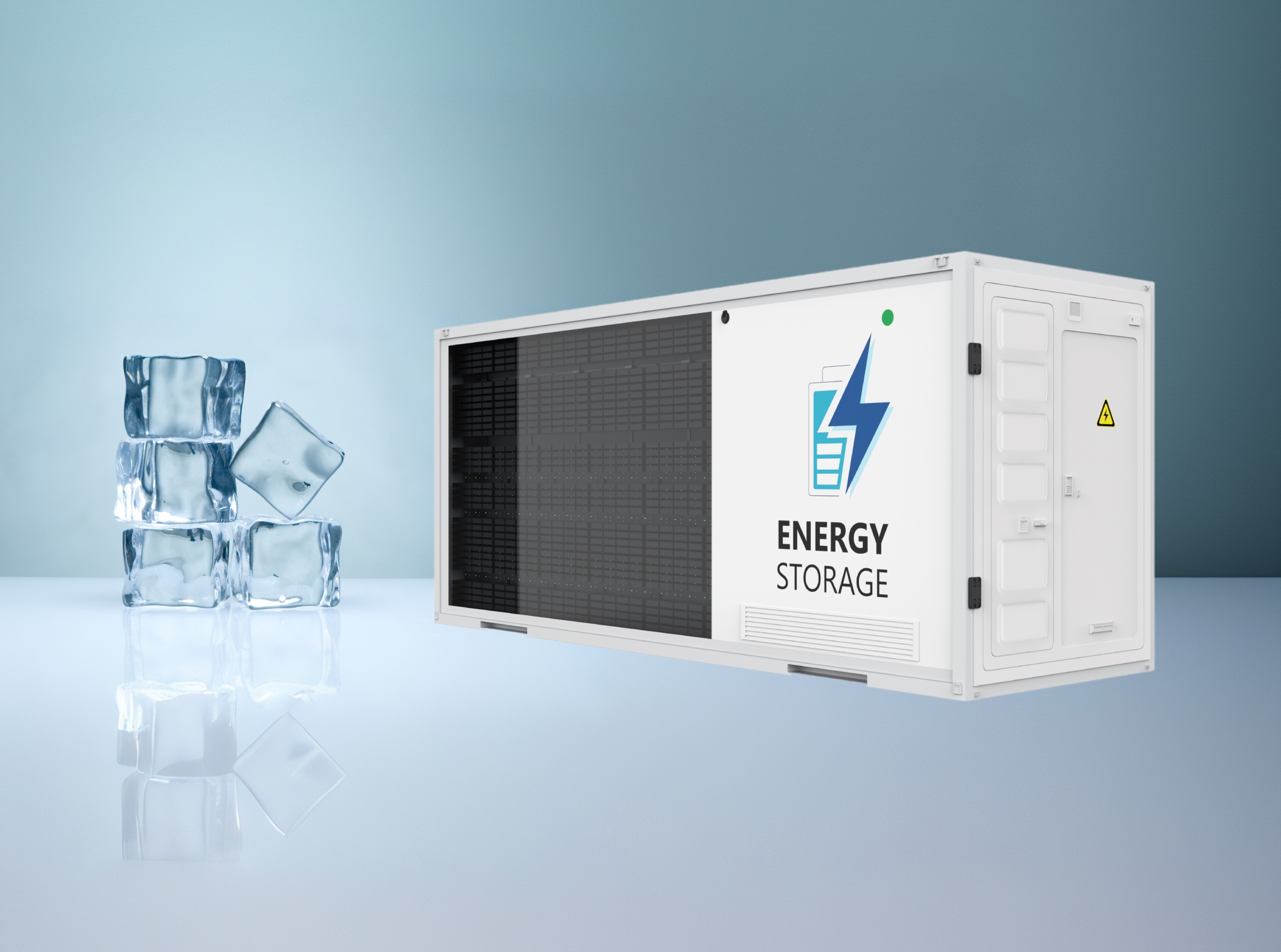
On hot summer days, air-conditioning systems in buildings across the country are cranked up to keep occupants comfortable. This increased demand can really strain an already overburdened electric grid. One growing solution is ice thermal energy storage, sometimes known as "ice batteries."
Ice storage systems freeze liquid overnight when electricity demand is lower, then melt the ice to cool buildings during the day, decreasing energy demand and lowering overall costs. The global ice thermal energy storage market is expected to grow from $193 billion in 2024 to $443 billion in 2030, according to Allied Market Research.
How ice storage systems work
Ice and chilled water are both used as the cooling media in thermal energy storage systems. However, ice is much more common because it absorbs eight times as much thermal energy as chilled water.
During off-peak hours (usually at night), the system's chiller freezes water in a storage tank to create ice. The ice is stored in insulated tanks to minimize melting and maintain its cooling potential until needed.
During the day, especially during peak hours when cooling demand is high, the system circulates a heat transfer fluid (like water or glycol) through the ice storage tank. The fluid is cooled by the ice and then distributed through the building's air conditioning system to provide cooling.
Ice storage systems fall into two categories — full storage and partial storage. Full storage shifts the entire load to off-peak hours. In partial storage systems, a smaller chiller is combined with ice storage when more cooling capacity is needed or a chiller requires replacement. In the latter case, a much smaller chiller runs during both peak and off-peak hours, with help from stored cooling during peak hours.
Is ice storage right for your facility?
Ice storage has been implemented in a wide variety of facilities, including office buildings, universities, hospitals, data centers and more. It can be especially effective if one or more of these conditions apply:
- Electricity rates vary significantly during the course of a day.
- Electricity demand charges are high.
- The average cooling load is significantly less than the peak cooling load.
- Additional cooling capacity is needed.
- The existing cooling system needs extensive repair or replacement.
Safety is another factor. Ice batteries are inherently safer than commonly used lithium batteries because they store energy by freezing and melting water rather than relying on volatile chemical reactions. This simple thermal process completely eliminates the risks of toxic leaks and explosive fires associated with the flammable electrolytes found in lithium-ion systems.
Overall, if you're looking to upgrade your air conditioning system or your peak demand charges are high, an ice storage system could be a cost-effective long-term investment.
Ice storage system success stories
The Eleven Madison skyscraper in New York City is cooled by an ice storage system. About 500,000 pounds of ice are created every night to cool the building during the day. That's enough ice to fill three city buses full of ice cubes. The system can lower the building's cooling costs by up to 40%.
Norton Audubon Hospital in Louisville, Kentucky, uses 27 tanks of ice to sustain a network of cold water pipes that help keep operating rooms at a safe temperature and patients comfortable. Every night, some 74,000 gallons of water are frozen. Energy costs at Norton Audubon were $278,000 lower for the first year the ice storage system was in operation.